
Maldives Seaplanes, Speedboats and Seasons: The Planning Guide (2026)
By Alex Marlowe · May 16, 2026 · 14 min read
Two decisions decide whether a first Maldives trip is the trip the brochure promised or a more frustrating version of it: the transfer logistics (seaplane versus speedboat versus domestic flight) and the season window (dry, transition, wet). Both are non-trivially complicated; both are routinely under-explained at the booking stage; both are entirely solvable with twenty minutes of pre-trip planning.
This guide covers the two decisions in turn, with the resort and itinerary context kept in our Where to Stay in the Maldives: An Atoll-by-Atoll Guide for First-Visit Travellers (2026) and our Seven Nights in the Maldives: A First-Visit Single-Resort Itinerary (2026). Read this before either of those if you have not yet picked the dates or the atoll.
The seaplane window — daylight-only, weather-restricted, the late-arrival problem
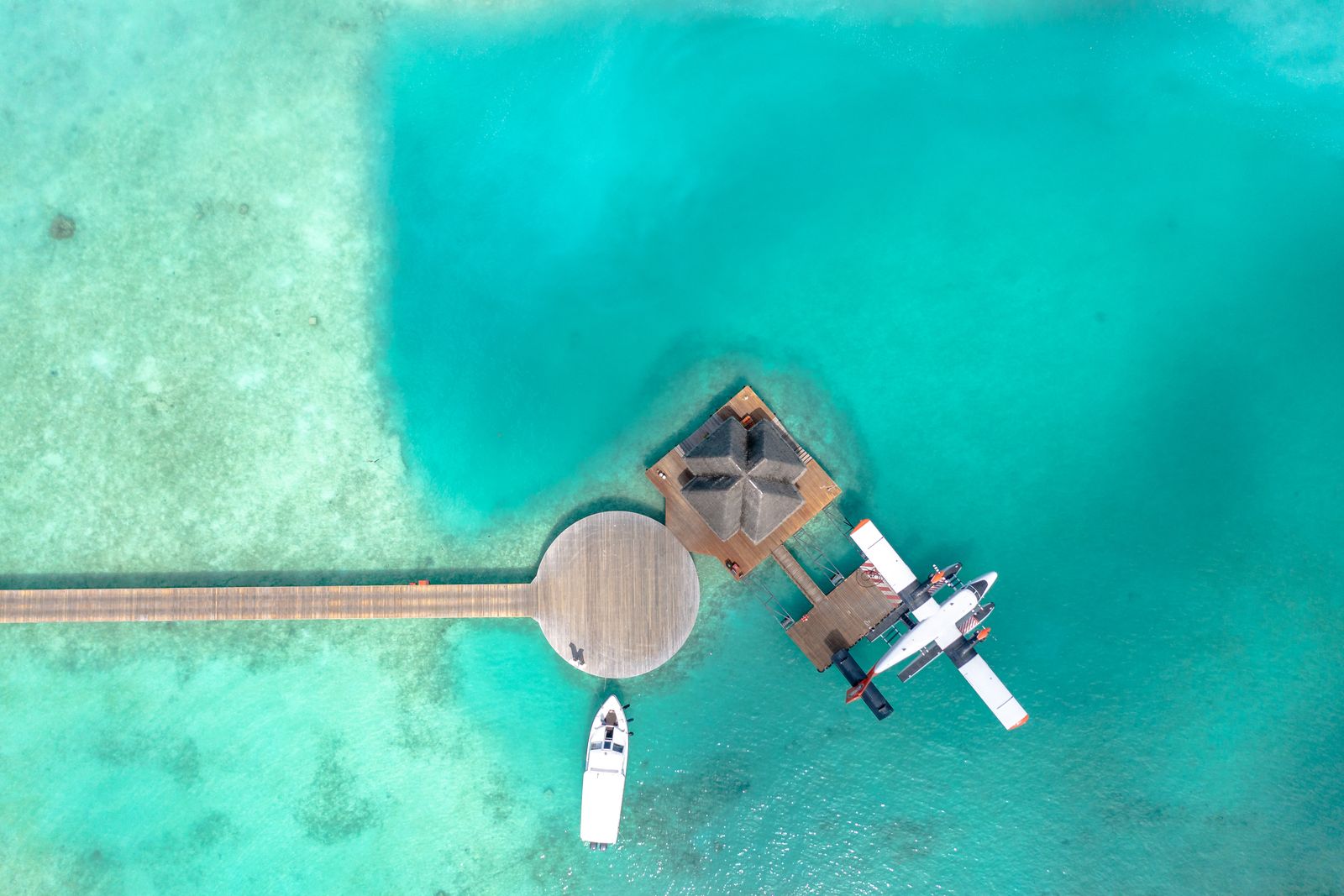
Trans Maldivian Airways (TMA) and Manta Air are the two seaplane operators in the country; both run essentially identical schedules and pricing. The single most important fact about both operators is that the seaplane window is daylight-only — the last departure of the day is approximately 4:30pm in summer and 4:00pm in winter, and there are no exceptions for late-arriving international flights. A Singapore Airlines Business, Emirates first-class review or Qatar long-haul that lands at MLE at 8pm cannot connect to the resort until the next morning's first 6:30am or 7:00am seaplane.
This is the single largest first-visit the Maldives edit planning miss. The textbook fix is one of three patterns:
- Pattern A — Book the airport-hotel overnight at the Hulhulé Island Hotel. The Hulhulé is the only on-airport option (5-minute walk from international arrivals, no transfer), $280–$420 a night for a base double in 2026. Every late-evening MLE arrival on a Saturday-to-Saturday Maldives schedule should book this as the textbook bridge. The hotel is competent rather than special; the breakfast is good; the transfer to the seaplane terminal next morning is the textbook 5-minute walk.
- Pattern B — Book the in-resort seaplane lounge for an early-morning sleep. Soneva, Cheval Blanc, the Waldorf and the Ritz all run dedicated lounges at the seaplane terminal with shower facilities, a quiet sleeping area, and a full breakfast service from 5am. Travellers landing at MLE at 11pm who need to be in the resort by 9am the next morning sometimes book the lounge directly (€80–€140 per person supplement) and skip the Hulhulé overnight; this works for resilient travellers and badly for everyone else.
- Pattern C — Book a daytime Singapore-or-Doha layover. The textbook elegant fix — fly into MLE on the morning Singapore Airlines or Qatar arrival (8:50am SIN-MLE or 8:35am DOH-MLE) by adding a 4-to-12-hour layover in either hub. The connection to the 11:00am seaplane is the textbook tight-but-clean transfer; the cost is one extra long-haul-business-class ticket leg.
- The departure-day version of the same problem. The seaplane back to MLE on the trip's last morning is also daylight-only and weather-restricted. The textbook honeymoon mistake is booking the late-evening 11:00pm Emirates departure on the last day — the seaplane window means the resort departure is at noon, leaving 11 dead hours at MLE international. The right fix is one of two patterns: book the 9:30am seaplane to MLE for the 12:30pm Singapore-or-Qatar mid-day departure (the textbook clean exit), or book a final-night Hulhulé Island Hotel stay if the departure flight is genuinely a late-evening one.
Speedboat versus seaplane — when the speedboat wins
Speedboat transfers are available for resorts within 30 minutes of MLE — essentially the North Malé and the closest South Malé properties. The speedboat runs on demand (no daylight-only restriction, no weather window), costs $200–$400 per person each way (compared to $600–$900 for the seaplane), and protects late-arrival logistics entirely.
The textbook speedboat-base properties are the Waldorf Astoria Ithaafushi (40-minute speedboat or 25-minute yacht), the Ritz-Carlton Fari Islands (45-minute speedboat or 15-minute seaplane), Patina Maldives (45-minute speedboat), the Naladhu Private Island (35-minute speedboat), COMO Cocoa Island (40-minute speedboat), and the new Capella North Malé (45-minute speedboat). For travellers landing at MLE at 11pm, any of these properties gets you in the villa by midnight.
The trade-off is the experience itself — the seaplane is genuinely one of the best-photographed parts of the trip, the aerial view of the atoll geography is the textbook trip-defining image, and a speedboat-only base means missing that single spectacle. The textbook solution at speedboat-base properties is a paid scenic-flight upgrade — most resorts offer a 20-minute scenic seaplane joy-flight at $280–$480 per couple — which delivers the experience without the schedule constraint.
The seasons — dry, transition, wet, and the Hanifaru exception
The Maldives runs on a single dry-and-wet monsoon calendar. The dry-season northeast monsoon runs November through April (the textbook visitor window — calmest seas, clearest water, lowest humidity, the marquee Christmas-and-New-Year peak); the wet-season southwest monsoon runs May through October (daily afternoon storms, choppier seas, surf-season swells on the western atolls, and 30–50% off rates).
- The dry-season detail (November–April). November is the textbook value sweet spot — the dry season opens, the rates are still 20–30% off the December peak, the seas have settled, the visibility for snorkelling and diving is the year's best. December and January are the headline peak — Christmas and New Year book a year out at every resort worth booking, the rates run €1,200–€2,000 a night above shoulder season, the second-most-expensive week is Chinese New Year in late January or early February. February and March are the textbook quality window — driest weather, calmest seas, full villa availability at shoulder rates. April is the closing month — the heat builds, the humidity climbs, the rates begin to drop sharply for the last two weeks.
- The wet-season detail (May–October). May is the transition month — the southwest monsoon arrives, the Hanifaru manta-and-whale-shark season opens (textbook serious wildlife), the rates drop another 20–30%. June through September are the textbook wet-season months — daily afternoon storms (typically 1–3pm, clearing by 5pm), choppy seas, surf-season swell on the western atolls (the textbook reason for serious surfers to come now). October is the second transition month — the storms ease, the visibility starts to recover, the rates remain at the wet-season floor.
- The Hanifaru exception. The Hanifaru Bay manta-and-whale-shark aggregation is May through November — the textbook serious-marine traveller's reason to book the wet-season window despite the weather. The aggregation is genuinely unique to this country at this scale; a Baa-atoll booking in June, July or August delivers the country's most documented wildlife event at the cost of the country's worst beach weather. The textbook trade is real and the choice is the traveller's.
- The surf-season exception. The southwest monsoon delivers the surf-season swell on the western atolls — Tropicsurf at Niyama, Cinnamon Dhonveli, Pasta Point. The textbook surf trip is May through October at any of these bases; the rates are wet-season floors, the swell is reliable, the surf-school staffing is at its annual peak.
The "best month" question, answered
For first-visit honeymoons and special-occasion weeks, the textbook answer is late February or early March — driest weather, calmest seas, full villa availability, no peak-rate premium. November is the value alternative; April is the late-shoulder budget play. Avoid Christmas, New Year, and Chinese New Year unless the trip is specifically built around the celebration window.
For serious snorkelling and diving travellers, the textbook answer is June through September in Baa — the Hanifaru aggregation is active, the manta and whale-shark sightings are reliable, the rates are at the wet-season floor. Pack for daily afternoon storms; the morning marine excursions are the trip.
For surfers, the textbook answer is June through August on a western-atoll base — the swell is reliable, the surf-camp staffing is at its peak, the rates are wet-season floors.
For travellers who simply want the country at the best rate-and-weather combination, the textbook answer is the second week of November — the dry season has just opened, the rates are still 20–30% off the December peak, the seas have settled, the visibility is at its annual best. This is the textbook value-luxury Maldives week.
A quick budget-honest summary
The Maldives is genuinely one of the world's most expensive countries by per-night spend; the trip's total cost is dominated by three line items: the resort rate ($1,800–$8,000 a night), the seaplane transfer ($600–$900 per person each way), and the long-haul flights ($3,500–$8,500 per person in business). The textbook seven-night first-visit honeymoon at a Baa base lands between $28,000 and $52,000 all-in for two travellers in business class; the same trip in economy is $18,000–$32,000.
The single largest budget lever is the seven-day-versus-five-day shape (a five-night North Malé escape at the Patina or Ritz Fari runs $14,000–$22,000 all-in for two in business). The second largest is the November-versus-December timing (a 25–30% rate difference). The third is the long-haul cabin (business versus economy, a $20,000–$35,000 swing).
For travellers calibrating the trip, see the broader destination context in our The 15 Best Affordable Luxury Destinations in the World global shortlist — the Maldives sits at the top of the spend-band globally, and the question of whether the country deserves the seven-night commitment is genuinely worth asking before the booking is locked.
Pre-trip admin — visas, currency, packing, and the small things that catch first-visit travellers out
The Maldives runs a free visa-on-arrival for every nationality — no paperwork, no fee, no advance application. The only required pre-flight admin is the Imuga online traveller declaration, filled in the 96 hours before departure (a 5-minute online form replacing the legacy paper arrival card). The departure tax is bundled into every international ticket since 2017; you will not see a separate fee at the airport. Travellers carrying prescription medication should bring the original packaging plus a doctor's note for any controlled substance — the customs spot-check at MLE is rare but consequential when it happens, and the country's controlled-substance enforcement is genuinely strict.
Currency is essentially a non-question on a single-resort week. Every resort runs USD-denominated room charges signed to the villa, settled at checkout by card; you will barely touch cash. The only practical use for cash is the day-trip Malé excursion (the fish market, the small Republic Square restaurants, the textbook tip for an off-resort speedboat captain) — carry $200–$300 in clean small USD bills and skip the rufiyaa entirely. Tipping the resort staff at checkout is the textbook closing-day ritual: $10–$20 per day for housekeeping, $20–$30 per day for the butler, $10–$20 per dive day for the dive instructor, $50–$100 from the group for a private-charter boat crew that ran a serious half-day. Most resorts add a 10% service charge to the bill that does not in practice reach individual staff; cash tips at checkout are the only meaningful gratuity.
Packing is genuinely lighter than first-visit travellers expect. The seaplane luggage limit is 20kg checked plus 5kg cabin per person — strictly enforced at the seaplane terminal, with overage charged at $5 per kilogram. The textbook honeymoon packing list is two pairs of swim shorts or two swimsuits, three linen shirts or kaftans, one pair of long trousers and one collared shirt for the signature dinners (every property worth booking has a smart-casual dress code at the headline restaurants), reef-safe sunscreen (the country banned chemical sunscreens with oxybenzone and octinoxate in 2020), a wide-brim hat, and a rashguard for the longer snorkel sessions. The textbook over-pack is the formal-wear suit-and-tie kit; nobody wears it, the humidity destroys it, the suitcase weight cuts into the more useful linen kit.
Sources
- 1.Trans Maldivian Airways — operational schedule, weather window, luggage policy — Trans Maldivian Airways. Accessed 2026-05-16.
- 2.Manta Air — seaplane and domestic flight operations — Manta Air. Accessed 2026-05-16.
- 3.Maldives Meteorological Service — monsoon calendar and 2026 outlook — Maldives Meteorological Service. Accessed 2026-05-16.
- 4.Baa Atoll Biosphere Reserve — Hanifaru Bay seasonal schedule — UNESCO and Baa Atoll Conservation Programme. Accessed 2026-05-16.
Frequently Asked Questions
Editor-in-Chief
Alex MarloweAlex Marlowe is Lucalvry's Editor-in-Chief. Twelve years covering hotels and travel for Condé Nast Traveller, Monocle, and Wallpaper. Based between London and Lisbon.
You Might Also Love
 Destinations
A Long Weekend in Copenhagen, Done Properly
Three nights in Copenhagen for the design-literate traveller — Villa Copenhagen, Geranium, the Louisiana day trip, and an honest take on Noma's closure and what's replaced it.
Jan 21, 2026 · 12 min read
 Destinations
The Quiet Kyoto Itinerary — Five Days, No Crowds (2026)
A five-day Kyoto plan structured entirely around avoiding the crowds — Fushimi Inari before 6am, the ryokan-versus-hotel question answered properly, and the kaiseki tradition explained for first-timers.
Jan 13, 2026 · 14 min read
 Destinations
Cinque Terre, But Make It Luxurious and Quiet
Cinque Terre's overtourism reality — and the Portovenere and Lerici case for the same Ligurian coast with better hotels and a fraction of the visitors. Plus the private boat tour that solves the rest.
Jan 06, 2026 · 12 min read