
Tanzania Safari Routing: 3 vs 5 Nights, Fly vs Drive (2026)
By Alex Marlowe · May 16, 2026 · 16 min read
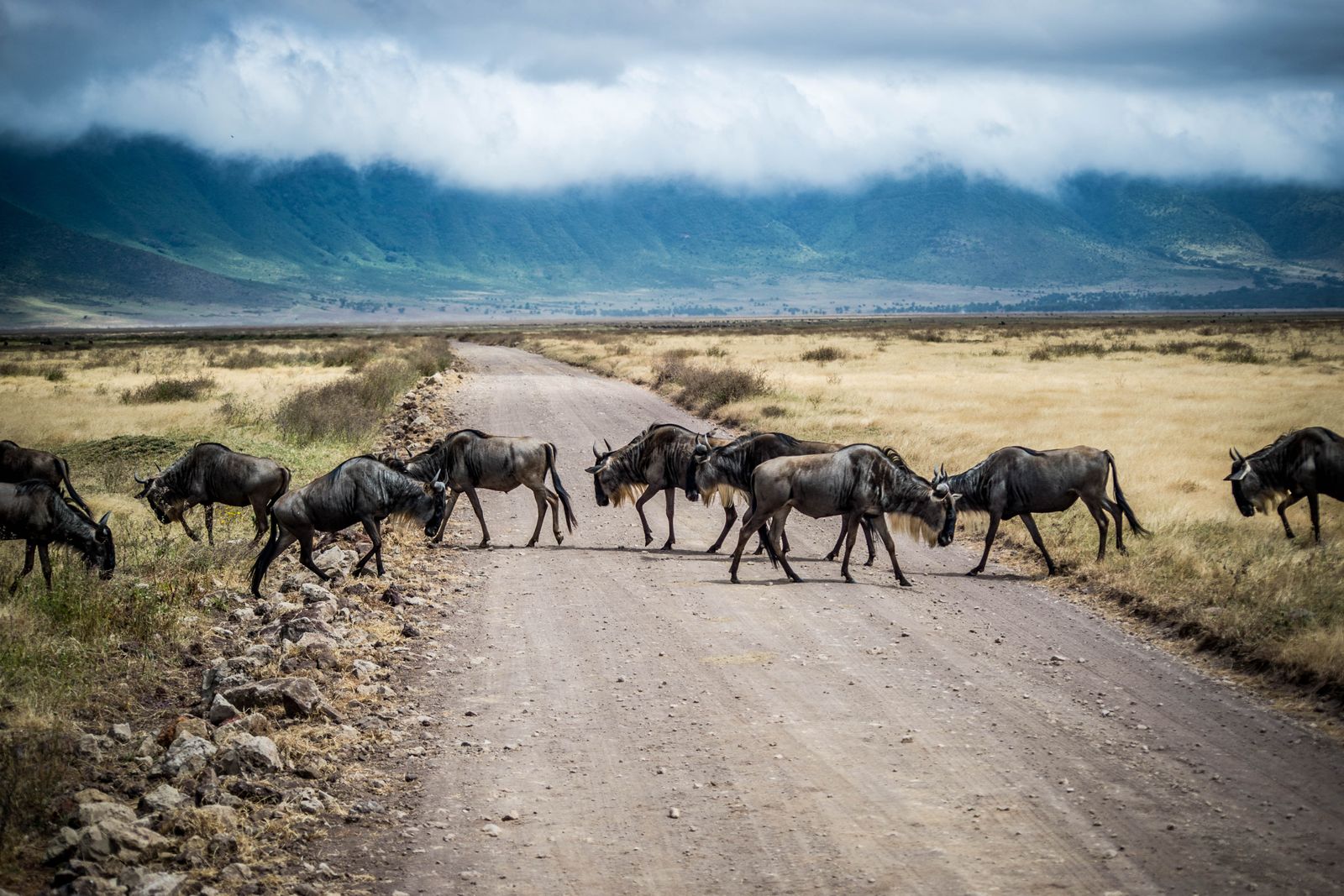
The Tanzania-safari routing question is the second most-asked planning question in any East-African trip calendar (the first being the Tanzania-versus-Kenya wedge, which is a separate piece). The trip's signature is the Serengeti and the Ngorongoro Crater — not the Arusha bookend — and the in-park night-count needs to be sized against the bush-plane schedule out of the Arusha airfield, the wildebeest migration's calendar-week location, and the Arusha-to-Ngorongoro tarmac drive that the road-routing variant adds back into the calendar. Too few in-park nights and the trip's signature game-viewing collapses into a single afternoon and a single morning at one cluster; too many and the trip's bookend logistics absorb days that should have been on the trip's other half (Zanzibar, Mafia Island, the Kilimanjaro climb).
This piece is the decision-shaped answer. It covers the 3-night Serengeti bracket (the textbook tight-calendar trip and the textbook second-Tanzania luxury edit shape), the 5-night Serengeti bracket (the textbook first-Tanzania pattern), the 7-plus-night extension (the multi-cluster and the Crater-plus-Serengeti weeks), and the fly-only versus fly-and-drive routing decision. For the named lodge clusters and the bookend property choices see our companion Where to Stay: Arusha vs Serengeti Lodges (2026); for the in-park camp ranking see Best Luxury Camps in the Serengeti 2026: Six Migration-Aligned Stays Tested.
The 3-night Serengeti bracket — when it works
A 3-night in-park calendar works for two trip shapes and the second-time Tanzania traveller. The structure is one where to stay in Arusha inbound night plus three Serengeti nights at a single cluster plus one Arusha outbound night — a 5-night total that delivers the textbook minimum viable Tanzania safari.
The first trip shape is the Serengeti-plus-Zanzibar edit week. The textbook 9-or-10-night calendar runs the 5-night Tanzania safari bracket (one Arusha, three Serengeti at a single cluster, one Arusha) plus four to five nights on Zanzibar's east coast or the offshore Mnemba Island. The Coastal Aviation schedule from the Arusha airfield direct to the Zanzibar airfield (ZNZ) runs the textbook midday departure (the 12.30pm or 2pm slot, the 90-minute non-stop flight) on most days, eliminating the Arusha outbound night entirely on the textbook routing — which is the textbook variant for travellers who want to compress the safari bracket into 4 nights total (one Arusha, three Serengeti, then the same-day Coastal Aviation onward to Zanzibar without the Arusha outbound). The 3-Serengeti-night decision against this trip shape is structural rather than preferential; the safari half cannot extend without compressing the beach half below the 4-night minimum.
The second trip shape is the Serengeti-plus-Kilimanjaro week, where the climb absorbs five to nine days and the safari has to fit into the remaining calendar. The textbook routing is the Kilimanjaro Marangu, Machame or Lemosho 6-to-7-day climb summit, the 1-night Arusha decompression overnight at Legendary or Lake Duluti, the 3-night Serengeti safari, the 1-night Arusha outbound — a 5-night Tanzania safari bracket on top of the climb's 8-to-10-day total. The climb-led traveller does not have the calendar for a 5-night Serengeti programme; the 3-night Serengeti compresses the bush half against the climb's centrepiece role.
The second-time Tanzania traveller is the third 3-night-bracket case. The textbook second-Tanzania calendar is the 3-night Singita Grumeti splurge bracket (one Arusha inbound, three Singita Sasakwa or Faru Faru nights, one Arusha outbound) — the trip is built around the Singita private-concession game-viewing experience rather than the migration-following programme, and the 3-night Grumeti calendar delivers the textbook private-reserve Tanzania at the textbook splurge rate band. The same logic applies to the second-time traveller's 3-night andBeyond Ngorongoro Crater-plus-Serengeti split (one crater-rim night, two Serengeti at a single cluster, one Arusha outbound) — a 4-night Tanzania bracket built around the crater game drive as the headline.
What 3 Serengeti nights does not do is justify the trip for the first-time Tanzania traveller. The Serengeti's geographic scale (14,750 km²) and the migration's annual loop mean a 3-night single-cluster programme captures one or two specific game-viewing scenarios but misses the textbook structural variety — the open-plains driving on the Seronera plains, the river-crossing programming on the Kogatende, the kopje game-viewing on the central Serengeti — that the 5-night calendar delivers. For the first-Tanzania safari the answer is 5 Serengeti nights minimum, not 3.
The 5-night Serengeti bracket — the textbook first-Tanzania
Five Serengeti nights is the right answer for any first-Tanzania safari, and the structure is one Arusha inbound night plus five in-park nights at one or two clusters plus one Arusha outbound night — a 7-night total. The case is structural — the textbook Tanzania trip needs the calendar slack to absorb the migration's specific week-of location, the cluster-to-cluster bush-plane transfer day, the optional Ngorongoro Crater overnight, and the calendar buffer for the textbook flight-delay-or-weather day that the small-aircraft network occasionally produces.
The textbook 5-night Serengeti calendar runs one of three single-cluster patterns for the migration-aligned month, or one of two split-cluster patterns for the migration-transition months.
The single-cluster July-to-October pattern is five Kogatende nights at Sayari Camp or Lamai Serengeti, with the textbook crossing-zone game drives every morning, the all-day picnic-lunch crossings at the Mara River (the textbook Bologonja or Cottars crossing points, the 11am-to-3pm staging window when the herds are most likely to enter the river), and the afternoon kopje-and-resident-game programme. The 5-night Kogatende run is the textbook river-crossing trip — three to five crossings witnessed in a normal week, the textbook trip-signature footage, and the rate band sits at USD 7,250 to USD 9,250 per person all-inclusive for the five in-park nights.
The single-cluster December-to-March pattern is five Ndutu nights at Lemala Ndutu or Olakira Migration Camp, with the textbook calving-plains game drives every morning (the textbook predator-action window when the wildebeest are dropping calves at the rate of 8,000 per day in the peak week), and the afternoon Naabi Hill and Hidden Valley game programme. The 5-night Ndutu run is the textbook calving-and-predator trip and the rate band sits at USD 5,750 to USD 7,250 per person all-inclusive.
The single-cluster April-to-June pattern is five Grumeti nights at Singita Faru Faru or Sabora, for the textbook western-corridor migration leg and the year-round private-reserve programming. The 5-night Singita run is the textbook splurge trip and the rate band sits at USD 14,000 to USD 18,000 per person all-inclusive — materially above the rest of the Serengeti field, and the rate-band comparison is to Botswana's Mombo or South Africa's Royal Malewane rather than to Sayari or Namiri.
The split-cluster patterns sit either side of the migration-transition months. The June-to-July transition is three Grumeti nights (the western-corridor herds) plus two Kogatende nights (the herds arriving at the Mara River); the October-to-November transition is three Kogatende nights (the herds beginning the southbound return) plus two Seronera or Ndutu nights (the textbook resident-game anchor). Both split patterns require one bush-plane transfer day on the textbook Coastal Aviation 11am pickup and 1pm arrival schedule.
Fly-only vs fly-and-drive — the routing decision
The Tanzania-safari routing question is whether the trip flies the entire in-park network on the bush-plane schedule (the textbook fly-only variant) or whether one or more transfer legs run by road on the Arusha-to-Ngorongoro tarmac and the Ngorongoro-to-central-Serengeti graded track (the textbook fly-and-drive variant). The decision turns on three structural facts.
The first is the fly-only premium. The textbook Coastal Aviation pricing from the Arusha airfield to the Seronera, Kogatende, Grumeti or Lobo airstrips runs USD 480 to USD 620 per person one-way, and the cluster-to-cluster transfer flights run USD 280 to USD 380 per person. The textbook fly-only 5-night calendar with one bush-plane connecting flight comes in at USD 1,500 to USD 1,800 per person in flight cost; the textbook fly-and-drive variant (Arusha to Ngorongoro by Land Cruiser, the Crater game drive, the onward graded-track drive to the central Serengeti, then fly out from Seronera) comes in at USD 700 to USD 900 per person in flight cost plus USD 350 to USD 450 per person per day for the private Land Cruiser-and-guide rate — a USD 250 to USD 400 premium across the trip total for the road variant.
The second is the calendar absorption. The fly-only Arusha-to-Seronera morning runs the 9am ARK departure, the 10.30am Seronera arrival, and the textbook 12pm Land Cruiser pickup for the afternoon game drive on the day of arrival — half a safari day on the calendar. The fly-and-drive equivalent runs the 8am Arusha Land Cruiser pickup, the 12.30pm Ngorongoro Crater rim arrival for the lunch and the rim sundowner, the next morning's crater-floor game drive from 6.30am to 11.30am, the 1.30pm graded-track departure to central Serengeti, and the 4.30pm arrival at the Seronera cluster lodge — a full extra day on the calendar absorbed by the road routing, traded for the textbook Crater game drive and the rim overnight.
The third is the experiential trade. The fly-only routing delivers the maximum in-park night-count and the textbook minimum logistical friction. The fly-and-drive routing delivers the textbook Crater game drive as a headline experience, the Mto wa Mbu Maasai-and-cultural village stop on the tarmac drive, the Lake Manyara baobab-and-tree-climbing-lion overnight as the optional add-on, and the textbook scenery of the Ngorongoro Highlands tarmac that the bush-plane skips at 12,000 feet. For the textbook first-Tanzania traveller the fly-and-drive 5-night bracket (Arusha inbound, Ngorongoro Crater overnight, three Serengeti at a single cluster, fly out from Seronera or Kogatende back to Arusha for the outbound night) is the textbook richer calendar; for the textbook tight-calendar or second-Tanzania traveller the fly-only 5-night bracket is the textbook simpler one.
The 7-plus-night extension
The 7-plus-night Tanzania-only calendar is the right answer for two trip shapes. The first is the textbook multi-cluster Serengeti week — one Arusha inbound, three nights at one cluster, two nights at a second cluster, one or two Arusha outbound nights — which delivers the textbook structural variety of the Serengeti's geography in a single trip. The textbook July-to-October multi-cluster routing is three Kogatende nights (the river crossings) plus two western Grumeti or central Seronera nights (the resident game and the optional Singita splurge). The textbook December-to-March multi-cluster routing is three Ndutu nights (the calving) plus two central Seronera nights.
The second is the Serengeti-plus-Ruaha or Serengeti-plus-Selous week, which absorbs the textbook southern-circuit Tanzania safari into the same trip. The Coastal Aviation southern-circuit network connects the Serengeti's Seronera airstrip to Ruaha National Park's Msembe airstrip (the textbook 3-hour 45-minute flight with a Dar es Salaam refuel) and to Nyerere National Park's (formerly Selous) Beho Beho airstrip (the textbook 3-hour flight with the same Dar refuel). The textbook southern-circuit 8-night calendar is one Arusha, three Serengeti, three Ruaha at Jabali Ridge or Kigelia Ruaha, one Arusha outbound — the trip absorbs both the northern-circuit migration safari and the southern-circuit dry-land-and-baobab safari into a single 8-night programme that the 5-night calendar cannot deliver.
For the property-level booking conversation on either bracket see our Where to Stay: Arusha vs Serengeti Lodges (2026) and the in-park camp round-up at Best Luxury Camps in the Serengeti 2026: Six Migration-Aligned Stays Tested. For the broader Tanzania safari overview see Best Luxury Safari Camps in Tanzania 2026.
Sources
- 1.Coastal Aviation — Tanzania northern circuit schedule, fares and 15-kg baggage limit — Coastal Aviation. Accessed 2026-05-16.
- 2.Auric Air — Serengeti and Manyara network schedule 2026 — Auric Air. Accessed 2026-05-16.
- 3.Regional Air — northern Tanzania scheduled-flight network — Regional Air Services. Accessed 2026-05-16.
- 4.Ngorongoro Conservation Area Authority — crater access, vehicle and rim-lodge rules 2026 — Ngorongoro Conservation Area Authority. Accessed 2026-05-16.
- 5.Serengeti National Park — airstrip network and gate-fee schedule — Tanzania National Parks Authority. Accessed 2026-05-16.
- 6.Asilia Africa — northern Tanzania routing patterns and bush-plane lodge transfers — Asilia Africa. Accessed 2026-05-16.
- 7.Tanzania Tourist Board — visa, gate-fee and seasonality reference 2026 — Tanzania Tourist Board. Accessed 2026-05-16.
Frequently Asked Questions
Editor-in-Chief
Alex MarloweAlex Marlowe is Lucalvry's Editor-in-Chief. Twelve years covering hotels and travel for Condé Nast Traveller, Monocle, and Wallpaper. Based between London and Lisbon.
You Might Also Love
 Destinations
A Long Weekend in Copenhagen, Done Properly
Three nights in Copenhagen for the design-literate traveller — Villa Copenhagen, Geranium, the Louisiana day trip, and an honest take on Noma's closure and what's replaced it.
Jan 21, 2026 · 12 min read
 Destinations
The Quiet Kyoto Itinerary — Five Days, No Crowds (2026)
A five-day Kyoto plan structured entirely around avoiding the crowds — Fushimi Inari before 6am, the ryokan-versus-hotel question answered properly, and the kaiseki tradition explained for first-timers.
Jan 13, 2026 · 14 min read
 Destinations
Cinque Terre, But Make It Luxurious and Quiet
Cinque Terre's overtourism reality — and the Portovenere and Lerici case for the same Ligurian coast with better hotels and a fraction of the visitors. Plus the private boat tour that solves the rest.
Jan 06, 2026 · 12 min read