
Moorea vs Bora Bora Guide (2026): Which Island Wins for Your Trip?
By Alex Marlowe · May 16, 2026 · 12 min read
Moorea and Bora Bora are the two textbook French-Polynesia leisure-island bases — both with the lagoon-and-volcanic-peak environment, both with the overwater-bungalow resort category, both with the textbook seven-day French-Polynesia trip-anchor capacity. The decision between them is the textbook traveller's first-trip planning question, and the textbook answer is rate-and-pace versus signature-photograph.
This guide is the decision-shaped Moorea-vs-Bora-Bora comparison. It covers the four axes that drive the decision (rate, lagoon landscape, accessibility, programme depth), the three trip shapes that change the answer, and the textbook two-island split that delivers both. For the Moorea-only base-decision, see Where to Stay in Moorea (2026): Cook's Bay vs Opunohu Bay Picks. For the Bora Bora luxury guide room-category decision, see Where to Stay in Bora Bora (2026): Overwater vs Garden Villa Picks.
The four decision axes
- Axis 1 — Rate. Bora Bora flagship overwater rate runs USD 2,400 to USD 3,800 per night. Moorea flagship overwater rate runs USD 580 to USD 1,100 per night. The Moorea rate-per-night runs at 25% to 35% of the Bora Bora rate for the comparable resort category. The textbook seven-night rate delta between the two islands runs USD 12,800 to USD 21,000 in incremental Bora Bora spend.
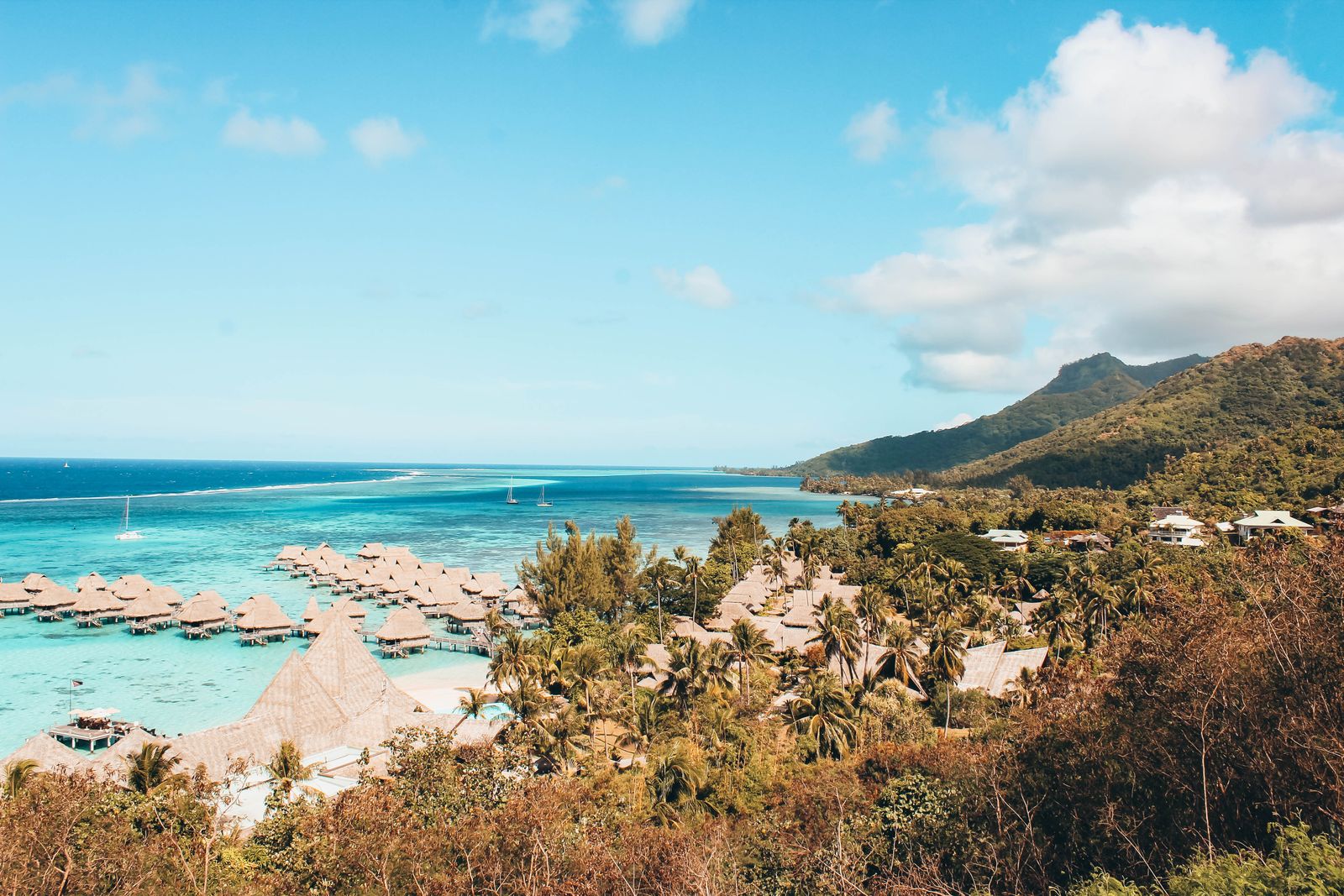
- Axis 2 — Lagoon landscape. Bora Bora's lagoon delivers the textbook Mount Otemanu signature — the 727-metre dormant volcanic peak rising from the main island with the encircling outer-motu lagoon ring, the textbook 8-to-10-kilometre Otemanu sightline from the overwater deck, and the textbook glass-clear lagoon water at the 15-to-25-metre visibility band. Moorea's lagoon delivers the textbook bay-and-mountain environment — the two deep north-coast bays (Cook's Bay and Opunohu Bay) cut into the volcanic interior, with the Mount Mou'aroa peak the textbook signature from Opunohu and Mount Rotui the textbook signature from Cook's Bay. Bora Bora wins the signature-photograph axis decisively; Moorea wins the landscape-variety axis (the bay-and-interior pattern).
- Axis 3 — Accessibility. Moorea is accessible by both the 30-minute Air where to stay in Tahiti flight and the 30-minute Aremiti or Terevau fast ferry from the Papeete waterfront — the textbook same-day-arrival connection from Tahiti at the textbook USD 20 ferry rate. Bora Bora is accessible only by the 50-minute Air Tahiti flight at the USD 380 round-trip rate. The Moorea accessibility-win is structural: the textbook five-night Moorea trip skips the additional Tahiti pad night the Bora Bora connection forces.
- Axis 4 — Programme depth. Bora Bora delivers the textbook lagoon-circuit programme (the shared and private lagoon-tour anchor sites, the manta-point dawn departures, the Mount Otemanu 4WD interior tour) at the textbook commercial-operator polish. Moorea delivers the textbook quiet-lagoon programme (the Cook's Bay outrigger paddle, the Opunohu Bay snorkel, the Belvédère viewpoint hike, the dolphin-and-whale-watching seasonal window) at the textbook smaller-operator pace. Bora Bora wins the programme-depth axis; Moorea wins the pace-quiet axis.
The three trip shapes
- Shape 1 — The textbook honeymoon or anniversary. Bora Bora wins on every axis except rate. The trip-defining signature photograph (Mount Otemanu from the overwater deck, the lagoon-circuit private-charter, the sunset cocktail cruise) is the textbook trip-justifying experience the Moorea environment cannot replicate at the same scale. The rate premium earns its rate for the once-in-a-lifetime trip-shape.
- Shape 2 — The textbook second-trip or family stay. Moorea wins on every axis except signature-photograph. The rate-per-trip-day, the dining-variety pattern (Cook's Bay village-walk dinners), the Belvédère viewpoint interior environment, and the textbook family-friendly pace are the trip-justifying experiences the Bora Bora environment cannot replicate at the same value. The textbook second-trip pattern is the seven-night Moorea stay.
- Shape 3 — The textbook two-week French-Polynesia trip. Both islands win. The textbook two-week pattern is one-or-two nights Tahiti plus five nights Moorea plus six nights Bora Bora plus one return-leg Tahiti night. The Moorea front-end delivers the textbook arrival decompression and the bay-and-village pace; the Bora Bora back-end delivers the textbook signature-photograph and the lagoon-circuit programme depth.
The rate-delta analysis
The textbook seven-night Bora Bora overwater stay at the Four Seasons runs USD 23,800 (seven nights at USD 3,400 per night). The textbook seven-night Moorea overwater stay at the Sofitel Kia Ora runs USD 5,320 (seven nights at USD 760 per night). The rate delta is USD 18,480 — the textbook value-and-pace argument for Moorea.
The textbook two-island split (three nights Moorea Sofitel plus four nights Bora Bora Four Seasons) runs USD 15,880 — USD 7,920 below the all-Bora-Bora pattern at the textbook three-night Moorea front-end. The split-pattern is the textbook value-and-experience win for travellers who want both islands without the full-Bora-Bora rate commitment.
The accessibility-shape analysis
The Bora Bora trip-pattern forces at least one Tahiti pad night for the morning Air Tahiti connection. The textbook five-night Bora Bora stay is structurally a six-night French-Polynesia trip (one Tahiti, five Bora Bora). The Moorea trip-pattern skips the Tahiti pad — the same-day Papeete-to-Moorea fast ferry connection delivers the arrival-day Moorea check-in at the textbook USD 20 ferry rate. The textbook five-night Moorea stay is structurally a five-night French-Polynesia trip — one fewer trip-night and one fewer Tahiti pad rate against the comparable Bora Bora pattern.
The signature-photograph analysis
Bora Bora's textbook signature photograph is the Mount Otemanu sightline from the overwater deck. The composition — the foreground overwater villa, the mid-ground lagoon water, the background Mount Otemanu peak — is the textbook French-Polynesia trip image and is the textbook traveller's pre-trip mental picture. The image is structurally impossible to replicate from any Moorea base; the Mount Mou'aroa and Mount Rotui peaks are smaller (880m and 899m respectively) and the bay-environment lagoon does not deliver the same outer-motu encircling-ring composition.
Moorea's textbook signature photograph is the Belvédère viewpoint over Opunohu and Cook's Bays. The composition — the two deep bays cut into the volcanic interior, the Mount Mou'aroa peak between them, the lagoon ring beyond — is the textbook Moorea image and is the textbook trip's landscape-day signature. The image is structurally different from the Bora Bora overwater-deck pattern; the two photographs do not substitute for each other and the textbook two-image trip-goal is the strongest case for the two-island split.
Comparison snapshot
| Axis | Bora Bora | Moorea | Winner | | --- | --- | --- | --- | | Flagship overwater rate (USD/night) | 2,400–3,800 | 580–1,100 | Moorea (×3 to ×4 rate advantage) | | Lagoon-signature landscape | Mount Otemanu encircling motu | Cook's and Opunohu bays | Bora Bora (photograph), Moorea (variety) | | Accessibility from Tahiti | 50-min flight, USD 380 round trip | 30-min ferry, USD 20 each way | Moorea | | Lagoon programme depth | Shared + private + 4WD + manta | Outrigger + Belvédère + dolphin | Bora Bora | | Dining variety | Resort-only on outer motus | Village walks on Cook's Bay | Moorea | | Trip-pace | Event-day programme | Quiet-day rhythm | Moorea |
Trip-shape decision matrix
| Trip shape | Total nights | Bora Bora nights | Moorea nights | Tahiti nights | Best for | | --- | --- | --- | --- | --- | --- | | 5-night Moorea-only | 5 | 0 | 5 | 0 | The textbook short-trip value-and-pace play | | 7-night Moorea-only | 7 | 0 | 7 | 0 | The textbook family or second-trip stay | | 6-night Bora-Bora-only | 6 | 5 | 0 | 1 | The textbook short-trip honeymoon | | 8-night Bora-Bora-plus-Tahiti | 8 | 6 | 0 | 2 | The textbook fuller honeymoon | | 11-night two-island split | 11 | 6 | 4 | 1 | The textbook two-week first French-Polynesia trip | | 14-night three-island | 14 | 6 | 5 | 1 (+2 Rangiroa) | The textbook longer dive-and-resort trip |
The textbook two-island split — the strongest single recommendation
For travellers running a first French-Polynesia trip of ten-or-eleven total nights, the textbook split is one Tahiti arrival night plus four-or-five Moorea nights (the textbook value-and-pace front-end with the Belvédère and Cook's Bay programme) plus five-or-six Bora Bora nights (the textbook signature-and-programme back-end with the lagoon-circuit and overwater morning). The Moorea-to-Bora-Bora connection is the morning Air Tahiti flight from MOZ to BOB (45 minutes, USD 280 each way); the front-end Moorea base allows the textbook decompression-and-orientation arrival before the splurge-rate Bora Bora window opens.
The split-pattern delivers the textbook two-photograph trip goal (the Belvédère viewpoint plus the Mount Otemanu overwater deck) and the textbook trip-pace rhythm (the quiet-day Moorea front-end plus the event-day Bora Bora back-end). The blended rate runs USD 1,400 to USD 1,900 per night across the two islands against the all-Bora-Bora pattern's USD 2,400-to-USD 3,400. The textbook savings: USD 7,000 to USD 12,000 against the all-Bora-Bora seven-night pattern, redeployed to the additional Moorea nights and the Tahiti-Iti or Rangiroa onward-leg.
The cost-per-night gap and the trip-budget mechanics
The single largest decision driver is the rate gap. Bora Bora overwater bungalows at the three textbook properties (Four Seasons, St Regis, Conrad) run USD 1,600 to USD 4,600 per night across the rate cycle, with the August peak holding USD 2,400 to USD 4,600. Moorea overwater bungalows at the Hilton run USD 740 to USD 1,400 across the cycle, with the August peak holding USD 1,000 to USD 1,400. A five-night Bora Bora August trip at the Conrad runs roughly USD 14,500 for the room before excursions; the same five nights at the Hilton Moorea runs roughly USD 5,800. The USD 8,700 delta funds the entire Moorea airfare from LAX or the textbook seven-night Bora Bora trip downgraded to a garden room.
The trip-budget mechanics push different trip-shapes towards different islands. A first-trip-of-a-lifetime traveller with a USD 25,000 budget for two should weight Bora Bora — the overwater-bungalow premium is the trip's textbook point and the rate absorbs cleanly. A returning where to stay in French Polynesia traveller with a USD 12,000 budget should weight Moorea — the rate-and-experience gap closes hard once the overwater novelty has worn off on a prior trip. A family with two children should weight Moorea — the beach access, the rental-car independence and the off-resort dining variety are the textbook family-trip wins.
The in-water experience comparison
Bora Bora's lagoon snorkelling is the textbook headline programme but the actual in-water quality varies by motu. The Four Seasons coral garden and the St Regis lemon-shark boundary are the two textbook in-resort snorkelling environments; the Conrad's Matira-side reef is shallower and less productive. The half-day lagoon tour (USD 180 to USD 240 per person) is the textbook way to see the full lagoon programme regardless of the home resort.
Moorea's in-water programme is structurally different. The Opunohu Bay ray-and-shark feeding station (USD 90 to USD 140 per person, 90 minutes) is the textbook close-encounter experience that Bora Bora does not offer at the same price point. The Cook's Bay dolphin-watch trip (USD 110 per person, three hours) carries a 90% sighting rate on the resident spinner pod. The Toatea coral-shelf shore-snorkel is the textbook walk-in reef that runs all day for free. A traveller who weights the in-water encounter programme over the overwater-bungalow novelty often gets more out of Moorea than Bora Bora.
The two trip patterns that pair both islands
The textbook ten-night Moorea-plus-Bora-Bora trip runs four nights at the Hilton Moorea overwater bungalow, five nights at the Conrad Bora Bora garden bungalow, and one Papeete return-pad night. The total rate (August peak) lands around USD 12,500 for the room — close to the five-night Bora-Bora-only Conrad overwater stay and well below the five-night Four Seasons overwater stay. The textbook traveller who runs this pattern leaves having sampled both islands and both bungalow categories without the single-island programme repetition.
The fourteen-night three-island trip extends the pattern to two Tahiti nights, four Moorea nights, six Bora Bora nights and two return-pad nights — the textbook full French Polynesia introduction and the strongest rate-per-experience pattern for a first trip with a budget over USD 18,000.
A note on the textbook honeymoon-versus-second-trip frame
The textbook honeymoon-traveller default-weights Bora Bora for the textbook overwater-bungalow-and-photograph programme; the textbook second-trip traveller default-weights Moorea for the textbook excursion-and-rate-against-Bora-Bora win. The textbook structural decision-rule is the textbook overwater-novelty weighting against the textbook in-water-excursion-and-rate weighting. The textbook traveller who has already done a textbook overwater-bungalow stay on a prior Maldives or Bora Bora trip should default to Moorea; the textbook first-trip traveller should default to Bora Bora.
Sources
- 1.Air Tahiti — 2026 MOZ-BOB inter-island schedule and pricing — Air Tahiti. Accessed 2026-05-16.
- 2.Tahiti Tourisme — 2026 island comparison and trip-planning guide — Tahiti Tourisme. Accessed 2026-05-16.
- 3.Aremiti Ferry — Papeete-Moorea fast ferry 2026 schedule — Aremiti. Accessed 2026-05-16.
Frequently Asked Questions
Editor-in-Chief
Alex MarloweAlex Marlowe is Lucalvry's Editor-in-Chief. Twelve years covering hotels and travel for Condé Nast Traveller, Monocle, and Wallpaper. Based between London and Lisbon.
You Might Also Love
 Destinations
A Long Weekend in Copenhagen, Done Properly
Three nights in Copenhagen for the design-literate traveller — Villa Copenhagen, Geranium, the Louisiana day trip, and an honest take on Noma's closure and what's replaced it.
Jan 21, 2026 · 12 min read
 Destinations
The Quiet Kyoto Itinerary — Five Days, No Crowds (2026)
A five-day Kyoto plan structured entirely around avoiding the crowds — Fushimi Inari before 6am, the ryokan-versus-hotel question answered properly, and the kaiseki tradition explained for first-timers.
Jan 13, 2026 · 14 min read
 Destinations
Cinque Terre, But Make It Luxurious and Quiet
Cinque Terre's overtourism reality — and the Portovenere and Lerici case for the same Ligurian coast with better hotels and a fraction of the visitors. Plus the private boat tour that solves the rest.
Jan 06, 2026 · 12 min read