
Where to Stay in Mexico City (2026): Roma vs Polanco vs Condesa Picks
By Alex Marlowe · May 19, 2026 · 14 min read
Editorial changelog · 1 entry
- 2026-05-19Initial publish — neighbourhood verdicts, price bands, and 'avoid' flags captured.
Mexico City rewards the base decision more than the hotel decision. A four-night CDMX trip booked into the wrong cluster collapses into 90-minute Uber commutes across the Periférico ring road and the textbook 5pm Reforma standstill; booked into the right cluster, the same four nights run on foot across a walking-village radius of 1.5-2 kilometres with the metro and the Ecobici bike-share as the cross-city fallback. The four luxury clusters — Polanco, Roma Norte, Condesa, Centro Histórico — sit within a 6-kilometre triangle west of the historic core, but the booking-rhythm and the daily activity-inventory between them differ more sharply than between Manhattan's Upper East Side and the Lower East Side.
This guide is the base-decision answer. For the property-by-property ranking see our The 7 Best Luxury Hotels in Mexico City 2026. The standard luxury CDMX stay is four nights at a single property; the five-or-six-night version usually splits across two bases — most often a Polanco dining-bracket opener followed by a Roma Norte or Centro Histórico walking-bracket closer. Three-night stays should pick a single base; the activity-inventory compromise is meaningfully less punishing in CDMX than in Miami because the cluster-to-cluster Uber distance is shorter and the metro fills the gap.
The MEX transfer reality and the altitude factor
Mexico City International Airport (MEX, Benito Juárez) sits 8 kilometres east of the Centro Histórico and 12-14 kilometres east of Polanco, Roma and Condesa. The transfer math, off-peak: 20-30 minutes to Centro Histórico via the Circuito Interior, 25-35 minutes to Polanco or Roma Norte via the Viaducto Río de la Piedad, 30-40 minutes to Condesa via the same corridor. At rush hour (4pm-8pm in all directions, 7am-10am westbound), add 30-60 minutes to any transfer — the Periférico and the Viaducto routinely run at walking pace. The Felipe Ángeles airport (NLU, 60 km north) is currently used mostly by Aeroméxico and Volaris domestic routes and is not a meaningful base-decision factor for international visitors.
The transfer booking runs three tiers. The flagship properties (Four Seasons, St. Regis, Las Alcobas, Sofitel Reforma, Casa Polanco) include the MEX transfer at the entry-suite category and offer it at MX$1,800-3,200 (US$95-170) per vehicle one-way for lower-category bookings. The hotel-mediated taxi via the airport's authorised-taxi desks at Terminals 1 and 2 runs MX$650-1,100 (US$35-60) for a sedan and is the textbook fix for travellers without the included-transfer category. Uber operates at MEX with the airport-pickup surcharge — pickup from the designated zone at the Hilton walkway (T1) or the upper-level ramp (T2) at MX$420-780 (US$22-42) off-peak. Avoid the unmarked "taxis" inside the terminal hall.
The altitude factor changes the first-day booking. Mexico luxury edit City sits at 2,240 metres (7,350 feet) — higher than Bogotá, lower than Quito, but enough that the first 24-36 hours run at meaningfully reduced exercise tolerance. The textbook fix is to book a hotel with on-site dining for night one (skip the cross-city dinner reservation), hydrate at 3-4 litres of water on Day 1, and defer the Chapultepec walking-and-castle morning to Day 2 or Day 3. Travellers arriving from sea-level cities (Lima, Miami, LA) should expect a 24-hour acclimatisation lag; travellers from Bogotá or Cusco arrive pre-acclimatised.
Polanco — the dining, museum and splurge base
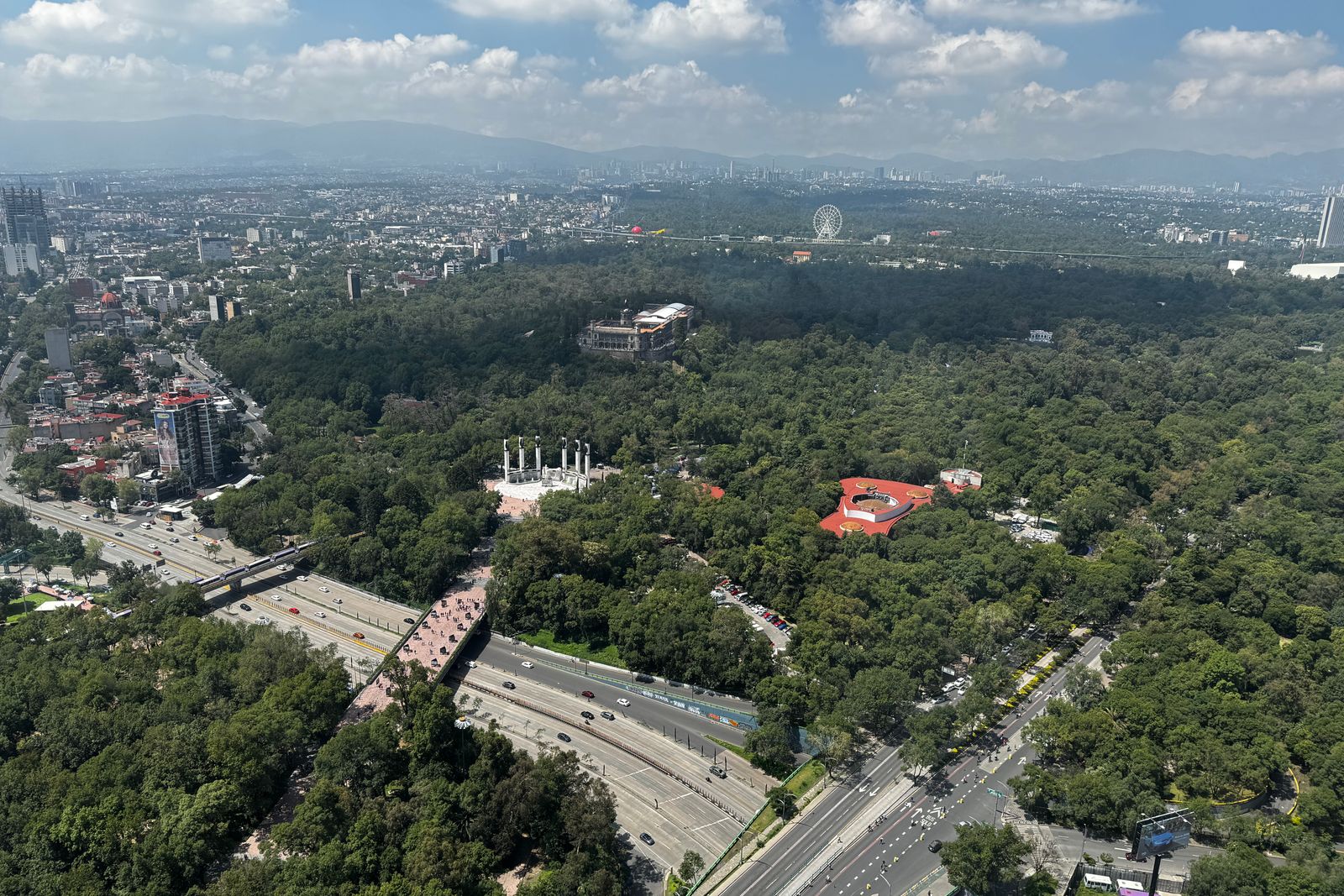
Polanco is the 4-square-kilometre wealthy residential-and-commercial district immediately north of Chapultepec Park, bounded by Avenida Ejército Nacional to the north, Avenida Mariano Escobedo to the west, Paseo de la Reforma to the south and Chapultepec to the east. The luxury hotel inventory clusters along Avenida Presidente Masaryk (the textbook Rodeo-Drive-of-CDMX shopping spine) and the parallel Avenida Campos Elíseos — a 1.8-kilometre east-west axis with the Four Seasons, St. Regis, Las Alcobas, JW Marriott, Presidente InterContinental and the Camino Real Polanco within a 12-minute walking radius of one another.
Stay here if the trip is dining-led (Polanco holds Pujol, Quintonil, and the textbook Masaryk fine-dining cluster within a 10-minute walk of any flagship), the Chapultepec museum-rotation is the primary anchor (Museo Nacional de Antropología, Museo Tamayo, Museo de Arte Moderno all sit on the Polanco side of the park), the splurge-flagship-hotel brief leads the booking, or the textbook business-or-conference travel anchors the trip. This is also the right base for first-time CDMX visitors running a single four-night trip without the second-base split.
- Hotels worth booking. Four Seasons Hotel Mexico City (Paseo de la Reforma 500, on the Reforma-Polanco edge) is the textbook flagship — 240 rooms in the 1994-opened eight-storey low-rise around the central courtyard with the Fifty Mils bar and the Zanaya seafood restaurant, US$520-820 per night for the Deluxe Room and US$1,200-1,900 for the Suite categories. St. Regis Mexico City (Paseo de la Reforma 439) is the textbook Reforma-skyline flagship — 189 rooms across the 31-storey César Pelli-designed 2009 tower with the Diana Plaza views, the King Cole Bar, US$520-780 per night for the Deluxe King. Las Alcobas Mexico City (Avenida Presidente Masaryk 390) is the 35-room Yabu-Pushelberg-designed Luxury Collection boutique on the central Masaryk dining axis at US$420-680 per night — the textbook splurge-boutique pick for travellers prioritising the smaller-property service-ratio over the flagship-tower brief. Sofitel Mexico City Reforma (Paseo de la Reforma 297) is the 2020-opened Kohn-Pedersen-Fox-designed 275-room high-rise at US$320-520 per night for the Reforma-view Luxury Room — the textbook design-forward mid-band alternative.
- The trade-off. Polanco delivers the strongest dining-and-museum inventory in CDMX, but it trades against the walking-village-village rhythm — Masaryk itself is a flagship-shopping street, not a strolling-village like Roma Norte's Álvaro Obregón or Condesa's Amsterdam, and the after-9pm pedestrian density drops sharply once the restaurants close. The fix for travellers wanting the splurge-hotel brief plus the walking-village evening rotation is the textbook Four Seasons base with the 10-15 minute Uber to Roma Norte for two of the four dinner evenings.
Roma Norte — the design-hotel and walking-village base
Roma Norte is the 1.8-square-kilometre early-20th-century residential-and-cultural neighbourhood 1.5 kilometres south of Reforma, bounded by Avenida Chapultepec to the north, Insurgentes Sur to the west, Avenida Cuauhtémoc to the east and Coahuila to the south. The textbook walking spine runs Álvaro Obregón (the tree-lined central boulevard with the Casa Lamm cultural centre and the textbook Sunday-tianguis-and-bookseller rotation) plus the parallel Colima, Orizaba and Tabasco residential streets — a 1.5-kilometre walking radius with the densest concentration of independent restaurants, mezcalerías and design hotels in CDMX.
Stay here if the trip is led by the walking-village-and-independent-dining brief (Roma Norte holds Contramar, Máximo Bistrot, Rosetta, Lardo, Sartoria and the textbook 30-restaurant cluster within an 800-metre walking radius), the textbook design-hotel-and-Airbnb-aesthetic register matters more than the flagship-tower brief, the textbook Sunday-Reforma-cyclovía priority anchors the booking (the 8am-2pm Sunday closure of Reforma to cars for the textbook 24-kilometre cycling-and-walking route runs cleanly from the Roma Norte base), or the textbook second-CDMX-trip register applies. This is the right base for travellers who want the textbook "local CDMX" experience rather than the international-flagship register.
- Hotels worth booking. Brick Hotel (Orizaba 95) is the textbook design-hotel flagship — 17 rooms across the 1908-built porfiriato townhouse with the Brick Bar courtyard restaurant by Richard Sandoval, US$320-520 per night for the King category. Ignacia Guest House (Jalapa 208) is the 5-suite restored 1913 mansion-conversion with the Ana Castilla-designed five-colour-themed-suite rotation, US$280-420 per night — the textbook small-property splurge-boutique pick. Casa Decu (Av. Álvaro Obregón 49) is the 9-room Art-Deco 1929-building conversion at US$220-360 per night for the King category — the textbook mid-band design-hotel alternative. La Palomilla Bed & Breakfast (Frontera 156A) is the 6-room artist-residency-format guesthouse at US$160-240 per night for travellers prioritising the textbook lower-band design-hotel register.
- The trade-off. Roma Norte trades the flagship-service-ratio against the walking-village rhythm — there is no concierge desk with the global-luxury-chain inventory, the spa-and-pool category is largely absent (Brick has a small wet-room; Ignacia and Casa Decu run zero pool inventory), and the textbook airport-transfer booking runs the public-Uber rotation rather than the hotel-included car. The fix for travellers prioritising the design-hotel base plus the spa-and-pool category is the textbook two-base split — three nights at Brick or Ignacia plus two nights at the Four Seasons or Las Alcobas for the spa-massage-and-pool-deck close.
Condesa — the leafy park-edge alternative
Condesa (split between Condesa, Hipódromo Condesa and Hipódromo) is the 2-square-kilometre tree-lined Art-Deco-and-functionalist neighbourhood immediately south of Roma Norte, anchored by the two adjoining oval parks — Parque México (the 9-hectare 1927-laid-out former Hipódromo Condesa racetrack, the textbook morning-run and Sunday-walking anchor) and Parque España (the 1.6-hectare 1921-opened textbook plaza-with-cafés western counterpart). The luxury hotel inventory is meaningfully sparser than Polanco or Roma Norte — the textbook Condesa booking runs the small-design-hotel or apart-hotel register, not the flagship-tower brief.
Stay here if the trip is a return CDMX visit, the textbook park-edge-and-leafy register matters more than the dining-village density (Condesa has strong cafés and bistros but the restaurant-density runs meaningfully lower than Roma Norte), the textbook morning-run-on-the-park priority is on the booking, or the textbook family-travel brief anchors the trip — Condesa runs meaningfully calmer than Roma Norte for travellers with children aged 5-14, the parks hold the textbook playground-and-cycling inventory, and the textbook Plaza Popocatépetl walking-village rotation runs without the late-night density.
- Hotels worth booking. Condesa DF (Avenida Veracruz 102) is the textbook 40-room Javier Sánchez-and-India Mahdavi-designed 2005-conversion of a 1928 triangular building at the Parque España edge, the rooftop bar-and-restaurant with the textbook park-view rotation, US$280-440 per night for the Standard category. Octavia Casa (Amatlán 126) is the 14-room boutique-conversion of a 1940s Hipódromo mansion at US$320-480 per night — the textbook small-property design-pick. La Valise Mexico City (Tonalá 53) is the 3-suite Yves-Naman-designed townhouse-conversion at US$420-680 per night for the rolling-bed terrace-suite category — the textbook splurge-boutique pick (book 60-90 days ahead, 3-suite inventory only).
- The trade-off. Condesa trades the dining-village density against the park-edge rhythm. The textbook Condesa dinner-rotation routinely runs the 10-15 minute walk or the 6-minute Uber north into Roma Norte for the restaurant inventory — the fix is to book one Roma Norte dinner per night and treat Condesa as the breakfast-and-park-morning base. The textbook return-from-Polanco-museum-day runs the 12-18 minute Uber south via Avenida Mazatlán; the textbook return from Centro Histórico runs the 20-25 minute Uber west via Avenida Chapultepec.
Centro Histórico — the cathedral, Zócalo and museum walking spine
Centro Histórico is the 9-square-kilometre UNESCO-listed historic core east of Reforma, anchored by the Zócalo (the 46,800-square-metre central plaza), the Catedral Metropolitana (the 1573-1813-built Spanish-colonial cathedral), the Templo Mayor Aztec-temple excavation, the Palacio de Bellas Artes and the Palacio Nacional with the Diego Rivera murals. The luxury hotel inventory clusters along the pedestrianised Avenida Francisco I. Madero corridor between the Zócalo and the Alameda Central — a 1.4-kilometre walking spine with the densest concentration of colonial-conversion boutiques and museum-and-cathedral anchors in CDMX.
Stay here if the trip is anchored to the cathedral-Zócalo-Templo-Mayor-Bellas-Artes museum-and-monument rotation, the textbook walking-spine-and-history brief leads the booking, the textbook two-base split puts the historic-core leg first (the textbook itinerary opens with the Centro for the Diego Rivera Palacio Nacional booking, then transfers to Roma Norte or Polanco for the dining-and-park closer), or the textbook lower-rate booking anchors the trip — the Centro rate-band runs meaningfully below Polanco at the equivalent category.
- Hotels worth booking. Umbral Curio Collection by Hilton (Venustiano Carranza 69) is the textbook 64-room 2020-opened design-flagship of the historic-core cluster at US$220-360 per night for the Deluxe category, the rooftop pool-and-bar with the textbook cathedral-and-Templo-Mayor view rotation. Círculo Mexicano (República de Guatemala 20) is the 25-room Habita-Group restored 19th-century-building conversion immediately north of the cathedral at US$240-380 per night for the King category — the textbook small-property design-pick. Downtown Mexico (Isabel la Católica 30) is the 17-room Grupo-Habita 17th-century-palace conversion at US$180-300 per night — the textbook lower-band design-flagship. Hotel Boutique de la Plata (Manuel María Contreras 18) is the 21-room 2018-restored Art-Nouveau conversion at US$160-260 per night.
- The trade-off. Centro Histórico trades the night-time activity density against the museum-and-monument walking-spine. The textbook after-9pm dining inventory thins meaningfully — the cluster runs strong for the lunch-and-museum-day rotation and meaningfully weaker for the late-dinner-and-bar-rotation, the fix is the textbook 7pm dinner booking at Azul Histórico, Limosneros or El Cardenal followed by the textbook 10pm Uber west to Roma Norte or Condesa for the mezcalería-and-cocktail close. The textbook security register also runs slightly different from Polanco or Roma Norte — the Centro is well-policed and safe along the Madero-Zócalo-Bellas-Artes spine through 10pm, but the textbook northeast Centro side-streets (north of Tacuba, east of República de Brasil) run a meaningfully different evening rhythm and should be avoided after 9pm on foot.
Quick reference
The benchmark luxury CDMX stay books at the 60-90 day window for the Four Seasons, St. Regis, Las Alcobas and Ignacia Guest House across the October-April peak, the 30-60 day window for the Brick Hotel, Condesa DF, Umbral and Casa Decu across the shoulder rotation, and the 14-30 day window for the Sofitel Reforma, Downtown Mexico and Hotel Boutique de la Plata across the May-September low-season. The minimum-viable luxury CDMX stay is three nights at a single base (Polanco for first-time dining-led visitors, Roma Norte for return visitors and design-hotel travellers, Condesa for family or park-edge travellers, Centro Histórico for the lower-band history-led booking). The benchmark four-night stay is the single-base booking at one of the four flagship clusters above; the benchmark five-or-six-night stay is the two-base split across one Polanco-or-Centro bracket plus one Roma-or-Condesa bracket. The fix for the November-Día-de-Muertos peak booking compromise (rates 30-50% above the May-August rotation) is the early-October or late-January shoulder-week booking that holds the rate-band compression cleanly. For the day-by-day itinerary across the Centro-Roma-Coyoacán rotation see Mexico City 3-Day Itinerary (2026): Centro, Roma–Condesa and Coyoacán Spine; for the property-by-property ranking see The 7 Best Luxury Hotels in Mexico City 2026.
Sources
- 1.Four Seasons Hotel Mexico City — 2026 room categories, Reforma-courtyard property and Fifty Mils programme — Four Seasons. Accessed 2026-05-19.
- 2.The St. Regis Mexico City — 2026 Pelli-designed Reforma tower, King Cole Bar and Diana Plaza views — Marriott / St. Regis. Accessed 2026-05-19.
- 3.Las Alcobas Mexico City — 2026 Yabu-Pushelberg Luxury Collection Masaryk boutique — Marriott Luxury Collection. Accessed 2026-05-19.
- 4.Brick Hotel Mexico City — 2026 Orizaba porfiriato-conversion and Brick Bar by Richard Sandoval — Brick Hotel. Accessed 2026-05-19.
- 5.Condesa DF — 2026 Javier Sánchez-and-India Mahdavi conversion and Parque España rooftop — Grupo Habita. Accessed 2026-05-19.
- 6.Umbral, Curio Collection by Hilton — 2026 Centro Histórico rooftop pool and Templo Mayor view — Hilton Curio Collection. Accessed 2026-05-19.
- 7.Aeropuerto Internacional de la Ciudad de México (AICM/MEX) — 2026 terminals, transfer and authorised-taxi programme — Grupo Aeroportuario Ciudad de México. Accessed 2026-05-19.
- 8.Secretaría de Turismo de la Ciudad de México — 2026 neighbourhood-by-neighbourhood visitor programme — Gobierno de la Ciudad de México. Accessed 2026-05-19.
Frequently Asked Questions
Editor-in-Chief
Alex MarloweAlex Marlowe is Lucalvry's Editor-in-Chief. Twelve years covering hotels and travel for Condé Nast Traveller, Monocle, and Wallpaper. Based between London and Lisbon.
You Might Also Love
 Destinations
A Long Weekend in Copenhagen, Done Properly
Three nights in Copenhagen for the design-literate traveller — Villa Copenhagen, Geranium, the Louisiana day trip, and an honest take on Noma's closure and what's replaced it.
Jan 21, 2026 · 12 min read
 Destinations
The Quiet Kyoto Itinerary — Five Days, No Crowds (2026)
A five-day Kyoto plan structured entirely around avoiding the crowds — Fushimi Inari before 6am, the ryokan-versus-hotel question answered properly, and the kaiseki tradition explained for first-timers.
Jan 13, 2026 · 14 min read
 Destinations
Cinque Terre, But Make It Luxurious and Quiet
Cinque Terre's overtourism reality — and the Portovenere and Lerici case for the same Ligurian coast with better hotels and a fraction of the visitors. Plus the private boat tour that solves the rest.
Jan 06, 2026 · 12 min read